El calendario y la hora
El calendario
El calendario II
El tiempo I
El tiempo II
Unidades de tiempo
Los minutos
Las horas
Lectura de la hora
Práctica de las horas digitales
El reloj
El reloj II
Medimos el tiempo
Horas y minutos
Piensa un poco
Pon los relojes en la hora indicada
Cuenta céntimos
Monedas y billetes
Trabajamos con dinero
Monedas - euros
Actividades con euros y centimos
Aplicación del cálculo a la resolución de problemas
Pagar con euros
Pagar con euros II
Resuelve problemas
Solución de problemas I
Solución de problemas II
Mejoro mis competencias

Do you know that 70% of our planet is covered in water? And do you know that, more or less, 68% of our body is made of water?
Water can be salt water or fresh water, and it can be found all over the world.
SALT WATER
Most of the earth´s water (97%) is salt water.
It can be found in seas and oceans.
Salt water is poisonous for humans so you can´t drink it.

FRESH WATER
Fresh water is the water humans can drink.

Fresh water comes from rain, snow and ice.
Where can we find fresh water? We can find fresh water in rivers, lakes, glaciers and under the Earth´s surface (it is called groundwater).
RIVERS
The water in rivers flows into a lake, another river, a sea or an ocean.
 |
| RIVER FLOWING INTO THE SEA |
 |
| TWO RIVERS FLOWING INTO ANOTHER RIVER |
LAKES
The water in lakes is fresh water and it doesn´t flow. Lakes are surrounded by land (but they have got a river that serves to feed the lake).
 |
| LAKES ARE SURROUNDED BY LAND |
GLACIERS
A glacier is a large persistent body of ice. Glaciers are the largest reservoir of fresh water on earth.

GROUNDWATER
As you have seen before, groundwater is water located under the Earth´s surface. The areas that contain large amounts of groundwater are called aquifers.
And how can people extract groundwater? People use wells to extract groundwater.
 |
| WELL |
Let´s watch a couple of videos now to learn more interesting facts about water.
More or less, there is always the same amount of water on earth and that water is constantly moving. The water cycle describes the continuous movement of water on, above and under the surface of the earth.
The four stages of the water cycle are:
CONDENSATION
PRECIPITATION
COLLECTION
EVAPORATION

CONDENSATION
As water vapor rises in the atmosphere from evaporation, it gets cold and turns into liquid (small drops of water). Those small drops of water get together and form clouds, that are carried away by the wind.
PRECIPITATION
When the drops of water are big enough, they fall down to the Earth as rain. If it is very cold, they can fall as snow or hail.
COLLECTION
Water from the rain collects in rivers and lakes. From rives, water gets back to the seas and oceans. Some water filters through the soil and become groundwater.
EVAPORATION
The sun heats up the water from seas, oceans, rivers or lakes. Then, the water is transformed into water vaporthat goes up to the the air (that is called evaporation). And the water cycle starts again.
Let´s review the 4 stages of the water cycle:

Time to watch a video to help us understand all that information
In the following video, you are going to see an experiment that proves how the water cycle works. You can try it at home if you want.
Time for recap.
Water has many different uses:
To drink: do you remember that humans can only drink clean fresh water? We can´t drink salt water ordirty fresh water (it would be full of dangerous bacterias).
 |
| ANIMALS ALSO NEED TO DRINK WATER |
 |
| YOU´LL NEED WATER TO COOK PASTA |
To clean: we use water to clean our houses, to brush our teeth, to wash our hands, to flush the toilet,...
 |
| YOU´LL NEED WATER TO CLEAN THE FLOOR |
 |
| WATERING THE PLANTS IS VERY IMPORTANT |
 |
| FARM ANIMALS NEED TO DRINK WATER |
 |
| WE CAN PRODUCE ELECTRICITY USING THE FORCE OF WATER |
 |
| WATER WILL COOL THE STEEL DOWN |
 |
| SOME ANIMALS AND PLANTS LIVE IN WATER |
For fun: do you like swimming? And skiing? And what about surfing? As you already know, to practice all these sports, you need water.
 |
| SURFING IS FUN!! |
Time now for the videos.
With the first video, you could check what you have learned.
Medidas de capacidad I
Medidas de capacidad II
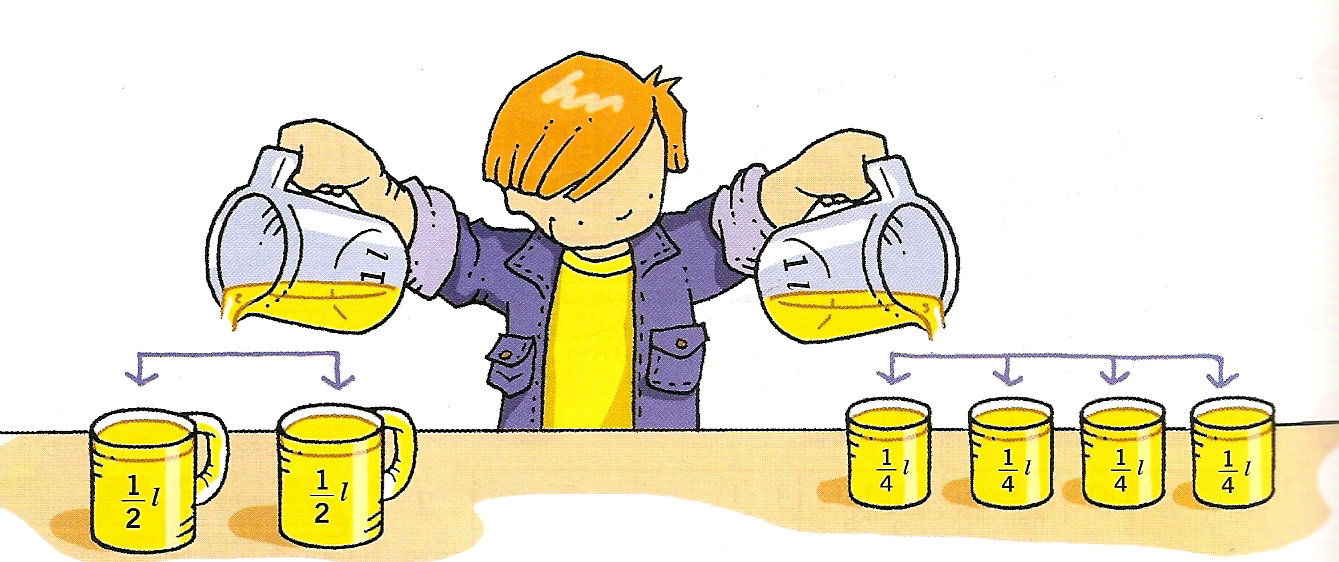
Litro , medio litro y cuarto de litro
¡Qué capacidad!
Capacidad
Unidades de capacidad
Capacidad de los recipientes
¿Cuántos litros hay en total?
Problemas de litros
Evaluación
El gramo
Medidas de peso
Medimos
Masa
El kilo y el gramo medidas de masa
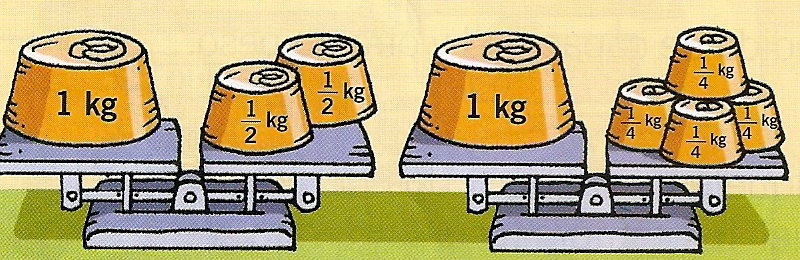 Jugamos con la balanza
La balanza II
Calcula su peso
La masa: instrumentos de medida
Kilo, medio kilo y cuarto de kilo
Medio y cuarto
El medio kilo y el cuarto de kilo
Resuelve problemas I
Resuelve problemas II
Mejoro mis competencias
- La medida de refuerzo educativo para las áreas de C. Sociales y C. Naturales será estudiar para la prueba de recuperación que tendremos a la vuelta de vacaciones.


Prefijos des- e in-
Prefijos des- e in- II
Los determinantes demostrativos
Determinantes demostrativos II

Los demostrativos
Los demostrativos II
El sonido g suave
El sonido g suave II
Ga, gue, gui, go, gu
Sílabas güe, güi
Ortografía natural
Dictado: el sonido g suave
Aprendemos a describir
Describir un objeto
Señalar la idea principal de un texto
Información relevante
Suscribirse a:
Entradas (Atom)